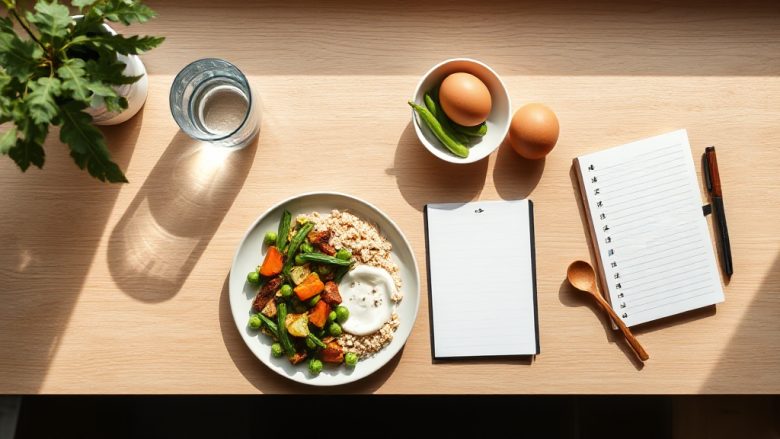
Most beginner nutrition advice fails for one boring reason: it asks for too much at once. You decide to eat better on a Sunday, download three apps, buy a spiraliser, and by Wednesday you’re eating cereal standing up over the sink wondering what went wrong. Nothing went wrong. The plan was just too big.
This checklist is the opposite. Five healthy eating habits for beginners, each one small enough to fit into an ordinary week that already contains work, laundry and a toddler who refuses all green food. You don’t need to track anything, weigh anything, or cook like someone with a food blog. You need five repeatable actions and a bit of patience.
Pick one. Do it for two weeks. Then pick the next. That’s the whole method.
1. Build Every Meal Around One Real Ingredient
Beginners usually start by cutting things out. No sugar, no bread, no joy. It’s miserable and it rarely lasts a fortnight. Flip it instead: instead of removing, add one real, unprocessed ingredient to every meal you already eat.
Your action: For the next seven days, make sure each meal contains at least one thing that grew or lived recently. Eggs count. Tinned beans count. Frozen peas count. A bag of crisps does not. That’s the entire rule.
This works because it crowds out the rubbish without a fight. If breakfast is toast, add two eggs. If lunch is a supermarket sandwich, add an apple and a handful of nuts. If dinner is pasta, throw frozen spinach into the sauce. You haven’t dieted. You’ve just made the meal slightly more real, and the total amount of junk has quietly dropped.
The common mistake: Turning this into a shopping project. Beginners often buy a trolley of unfamiliar ingredients, cook one ambitious meal, and give up when the rest rots. Buy the same five or six basics every week — eggs, oats, tinned beans, frozen vegetables, fruit, plain yoghurt — and let repetition do the work. Boring is a feature, not a bug.
2. Eat Protein at Breakfast, Even If It Feels Weird
Breakfast is where most beginner habits collapse, and it’s almost always because breakfast is pure carbohydrate. Cereal, toast, a pastry, a smoothie made entirely of fruit. An hour later you’re hungry again and reaching for something worse.
Your action: Add a palm-sized portion of protein to whatever you already eat in the morning. Greek yoghurt with your cereal. Two eggs with your toast. A spoon of peanut butter in your porridge. If you genuinely can’t face food at 7am, eat it at 10am instead. Timing matters far less than the protein itself.
Protein slows the whole meal down. You stay full longer, you snack less by accident, and you stop making decisions at 11am while hungry — which is when most bad food choices actually happen. It’s not about willpower. It’s about not being ravenous in the first place.
The common mistake: Buying protein powder before you’ve sorted out actual meals. Powders are fine, but they’re a supplement to a diet that already works, not a substitute for one. Fix breakfast with food first. If you still want a shake in three months, have one.
3. Cook One Meal a Week, Then Repeat It
People who eat well consistently are not cooking something new every night. They’re cooking the same handful of meals on rotation until those meals become automatic. That’s the skill beginners actually need — not recipes, but repetition.
Your action: Choose one simple meal you can cook without a recipe. Something like a stir-fry, a chilli, a tray of roasted vegetables with chicken, or beans on toast done properly. Cook it once a week for a month. Same meal, same method, four times.
By the fourth attempt you’ll stop measuring, stop checking your phone, and start adjusting. That’s when it becomes yours. And once you own one meal, adding a second is easy, because you already know how learning a meal feels.
The common mistake: Choosing something impressive. A beginner who picks a three-component curry with a homemade paste will cook it once and never again. Pick the meal a tired person could make on a Tuesday. If it needs more than one pan and fifteen minutes of thinking, it’s too ambitious for week one.
If you want one small piece of equipment, buy a decent non-stick pan and a sharp knife. That’s it. Everything else can wait until you actually need it.
4. Drink Water Before You Eat Anything Else
This one sounds too simple to matter, which is exactly why beginners skip it. But a surprising amount of snacking is just thirst wearing a disguise, and a surprising amount of overeating at meals is because you arrived at the table already dehydrated.
Your action: Drink a full glass of water before every meal, and keep a bottle on your desk or in your bag during the day. That’s the habit. No tracking app, no eight-glasses rule to argue about. Just water first, then food.
You’ll notice two things within a week. You’ll eat slightly less at meals without trying, and the 3pm biscuit urge will show up less often. Neither change is dramatic. Both are free.
The common mistake: Replacing water with something that sounds healthier. Flavoured water, juice, sports drinks, fancy kombucha — these are fine occasionally, but they don’t do the job. Plain water, or tea and coffee without a pile of sugar, is what you’re after. If you hate the taste of your tap water, buy a filter jug. It’s cheaper than the alternatives and you’ll actually drink it.
5. Plan Tomorrow’s Food the Night Before
This is the habit that holds the other four together. Not meal prep, not a colour-coded spreadsheet — just a thirty-second decision made the night before, while you’re calm and full, rather than at noon while you’re hungry and standing in a queue.
Your action: Each evening, decide three things: what you’ll eat for breakfast, what you’ll eat for lunch, and roughly what dinner looks like. Write it on a note, a whiteboard, or your phone. Nothing more detailed than that.
That’s it. You’ve just removed the moment where bad decisions get made. When lunchtime arrives and you already know it’s leftovers and an apple, you don’t negotiate with yourself. You just eat.
The common mistake: Planning every meal for the week in perfect detail on Sunday, then abandoning the plan by Tuesday because life happened. A seven-day plan is a wish list. A one-day plan is a decision. Do the small version, every night, and let it accumulate.
How to Keep Going When Motivation Fades
It will fade. That’s normal, and it isn’t a sign you’ve failed. Motivation is a starter motor, not an engine. What keeps these habits running is that they’re small enough to do on a bad day.
So here’s the honest version of how to continue. Judge yourself on consistency, not perfection. If you manage four of the five habits in a given week, that’s a good week — not a partial failure. Missing a day doesn’t undo anything; missing a fortnight does, so the goal is simply to never miss two weeks in a row.
Track it in the simplest way possible. A tick on a calendar is enough. You’re not measuring calories or grams, just whether you did the thing. After a month you’ll have a row of ticks, and that row is far more motivating than any number on a scale.
Expect one habit to be harder than the others. For most beginners it’s the evening planning, because it requires a decision at the exact moment you least want to make one. If that’s you, do it earlier — right after dinner, before you sit down. Attach it to something you already do without thinking, like brushing your teeth.
And keep your standards low on purpose. A meal of beans on toast with frozen peas is a good meal. A breakfast of yoghurt and nuts is a good breakfast. Healthy eating for beginners isn’t a cuisine. It’s a set of small, repeatable decisions that you make often enough that they stop feeling like decisions at all.
Start with one habit this week. Not all five. One. Then let the next one in when the first has stopped needing your attention. That’s how this actually works, and it’s the only version that survives a real life.